
Mentor City Directory Holdings
Morley Library in Painesville is the principal shelf for Mentor city directories. Its holdings use several locality labels, so a volume headed Painesville may include Mentor only in the years Morley identifies. The collection starts with Mentor Village in selected Painesville-inclusive editions, then changes through Mentor, Mentor Headlands, Painesville-Mentor, and a later multi-community subscription. Reading the title page first prevents a searcher from treating similar place names as the same jurisdiction.
| Collection | Years | Where Held | Access |
|---|---|---|---|
| Painesville volumes including Mentor Village | 1940, 1942, 1954 | Morley Library | Genealogy & Local History Room by appointment |
| Painesville / Mentor volumes | 1961; 1962, 1964, 1965 | Morley Library | Consult the named edition and locality list |
| Painesville-Mentor directory | 1966-1990 | Morley Library | Local-history collection |
| Multi-community Painesville coverage | 2000-ongoing subscription | Morley Library | Confirm current availability with the library |
| Haines & Co. Lake-Geauga criss-cross | 1976, 1977, 1981-1987, 1989, 1991-ongoing | Morley Library | Dated, address-oriented volumes |
Earlier Painesville city directories are useful regional evidence, not automatic Mentor coverage. Morley lists Painesville-only volumes for 1895, 1902, 1906, 1908, 1911, 1923, 1929, and 1930. Its Lake County directory list is also selective rather than continuous. A dated absence is therefore only an absence from that edition or search route.
Morley Library's Genealogy & Local History page explains the repository route for these Mentor city directory collections.
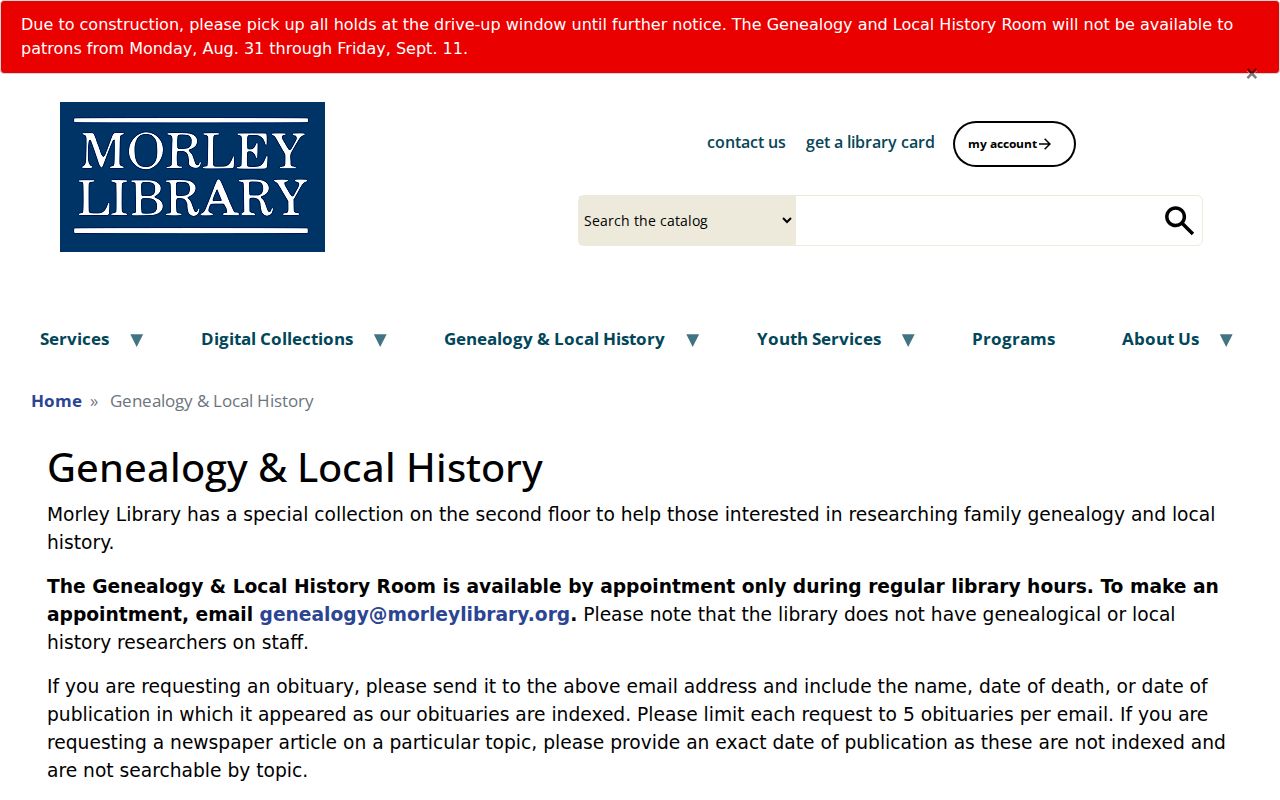
The room is on Morley's second floor and works by appointment during regular library hours, so a request should name the person, locality label, date range, record type, and the precise question.
Mentor City Directory Research at Morley
Morley publishes 184 Phelps Street, Painesville, Ohio 44077, and 440-352-3383 for the library. Its Genealogy & Local History Room contact is genealogy@morleylibrary.org. Published regular hours are Monday through Thursday from 10:00 a.m. to 8:00 p.m., Friday and Saturday from 9:00 a.m. to 5:00 p.m., and Sunday from 1:00 p.m. to 5:00 p.m. Appointment access is still the stated condition for the specialized room.
Ask staff to check a specific title and date instead of requesting an undated name search. For example, a request can identify whether the 1964 Painesville/Mentor volume contains a listing at a known address. That approach respects both incomplete publication runs and the difference between Mentor, Mentor Village, and Mentor Headlands.
Morley's city-directory holdings page supplies the collection titles and year groupings used here.
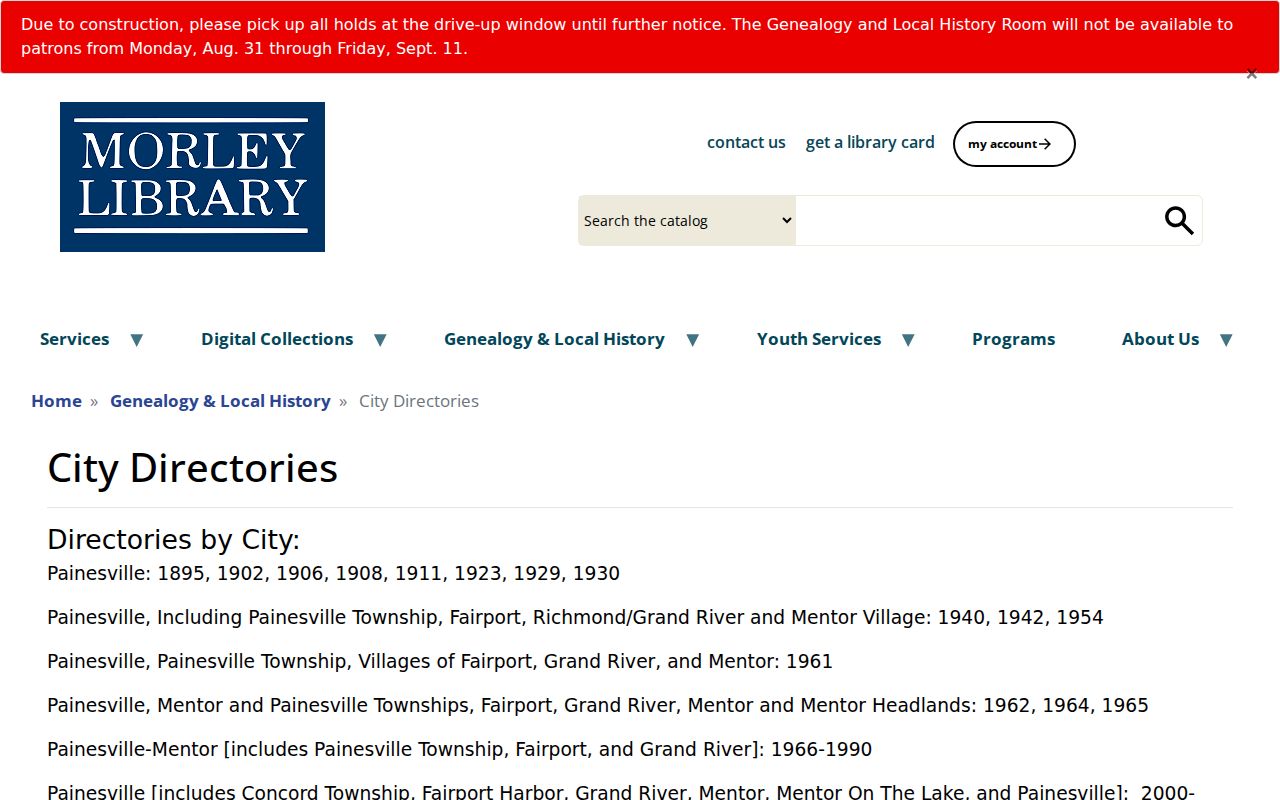
Those title-specific lists are the reason a Mentor search should begin with the edition heading, rather than with an assumption that every Lake County directory covers the same communities.
Note: Before arranging a visit, confirm the appointment procedure and hours directly with Morley because repository access can change.
Mentor City Directory Names Change by Era
The most useful quirk in the Mentor city directory shelf is that the same area is described through several historic locality names. Mentor Village appears in the selected 1940, 1942, and 1954 volumes. A Mentor title appears in 1961. Mentor and Mentor Headlands are both named in 1962, 1964, and 1965. The Painesville-Mentor run then carries the main local sequence from 1966 through 1990.
- 1923: Morley says street-address listings first appear in its city-directory collection.
- 1940-1954: Selected Painesville-inclusive volumes name Mentor Village.
- 1961-1965: Titles name Mentor, then Mentor and Mentor Headlands.
- 1966-1990: Painesville-Mentor creates a longer recurring run.
- 2000 onward: The multi-community Painesville subscription includes Mentor among several places.
These labels do not provide an address-conversion table. For a mismatch, retain the original title and compare the volume with the parcel legal description, historic maps, and Recorder instruments before asserting that two listings refer to one place.
Read a Mentor City Directory Entry Closely
A directory entry is a dated publication record, not a current profile. The documented 1906 Painesville transcription shows a four-part layout: name, a source-specific middle field, street address, and page or entry context. Keep each column's wording with the transcription rather than replacing it with a modern label. That early Painesville example does not establish Mentor coverage by itself.
| Name field | Read the surname and given name exactly as printed, including initials or variant spellings. |
|---|---|
| Middle field | Keep its source-specific wording rather than converting it into a modern identity claim. |
| Street field | Record the number and street as printed, with the edition year and locality title. |
| Page context | Preserve the page or entry reference so another reader can return to the same place. |
| Missing field | Do not fill a blank with a fact copied from a later volume or a different source. |
- Criss-cross directory
- An address-oriented directory arrangement. Morley's Haines & Co. volumes are useful only for the specific edition year searched.
- Householder index
- An index, when a volume provides one, that points a household name to its printed entry. It is not proof beyond that edition.
- Abbreviation key
- The explanatory key printed in a directory volume. Check it before expanding any shortened source wording.
Morley's genealogy index page gives the related local-history research route.
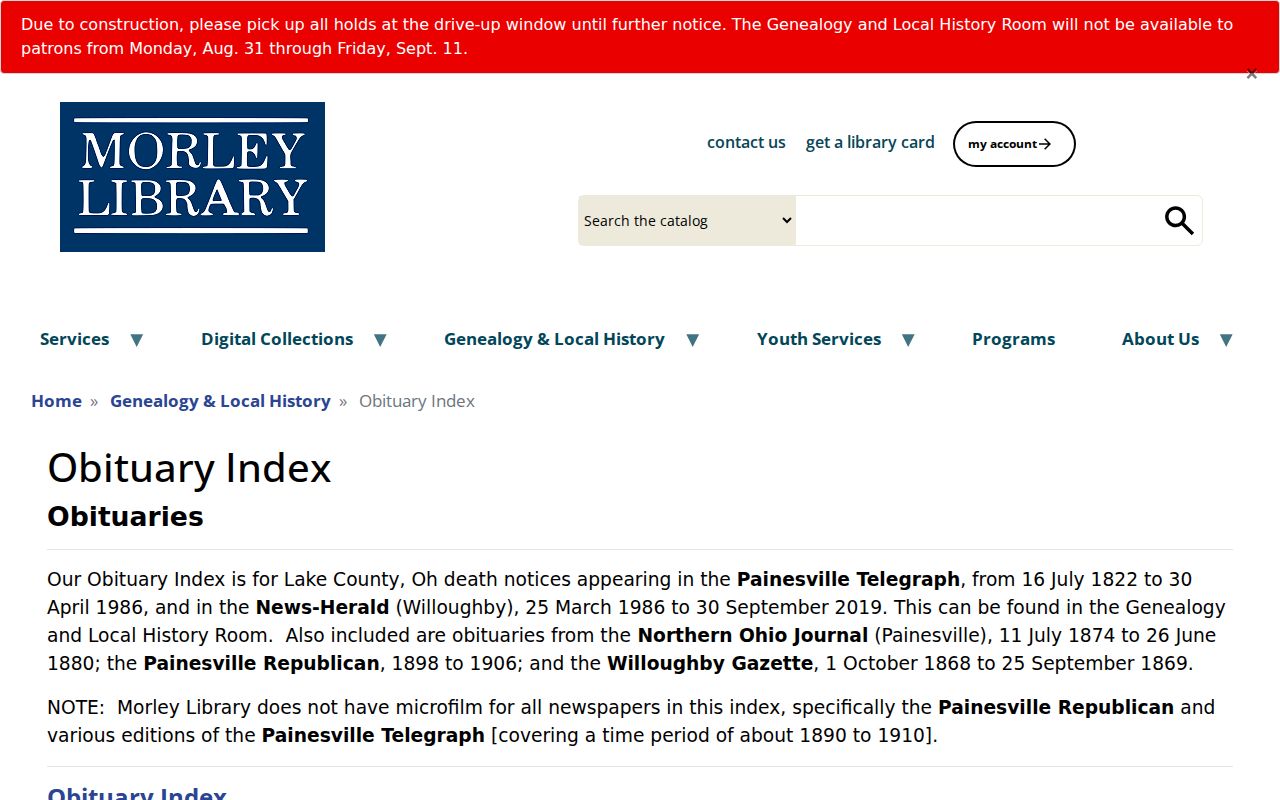
Morley's index and newspaper resources offer a separate way to test a dated listing, but no index result should be stretched into a claim that a person never appeared elsewhere.
Mentor City Directories Need Dated Companions
Street addresses begin in Morley's city-directory collection in 1923. Before that point, an entry may use a locality label without a numbered street address. Lake County historic atlases for 1840, 1857, 1874, 1898, and 1915 can supply period roads, plats, landholder context, and place names, but they cannot alone prove that an old road line equals a modern parcel or street number.
Morley holds Lake County census microfilm for 1840-1880 and 1900-1930, along with stated Ohio indexes for selected years. The federal 1890 population census was destroyed, though pensioner and widow schedules can sometimes provide a partial substitute. Treat each census household as a record for that census date, county, township or city, and page context, rather than blending decades into one narrative.
Mentor Public Library adds another research channel. Its database list includes Ancestry Library Edition for in-library use only, plus links to FamilySearch, Fold3, HeritageHub/NewsBank, HeritageQuest, Sanborn maps, and other regional resources. The in-library limit belongs beside any Ancestry reference.
Mentor City Directory Clues at History Center
A city directory address can become a focused catalog question at the Lake County History Center. Its online database describes about 31,000 collection pieces, including the kinds of regional photographs, family papers, engineering drawings, and local documents that may add context to a place or name. The catalog describes collection material; it is not a complete online archive.
Search terms default to OR in the catalog. Use AND when both terms must appear, quotation marks for a phrase, wildcards for spelling variations, and the People or Creator advanced fields when appropriate. For a broader collection question, the Center directs researchers to 440-639-2945 or vrobb@lakehistory.org.
Lake County History Center's online collections database documents those search options.
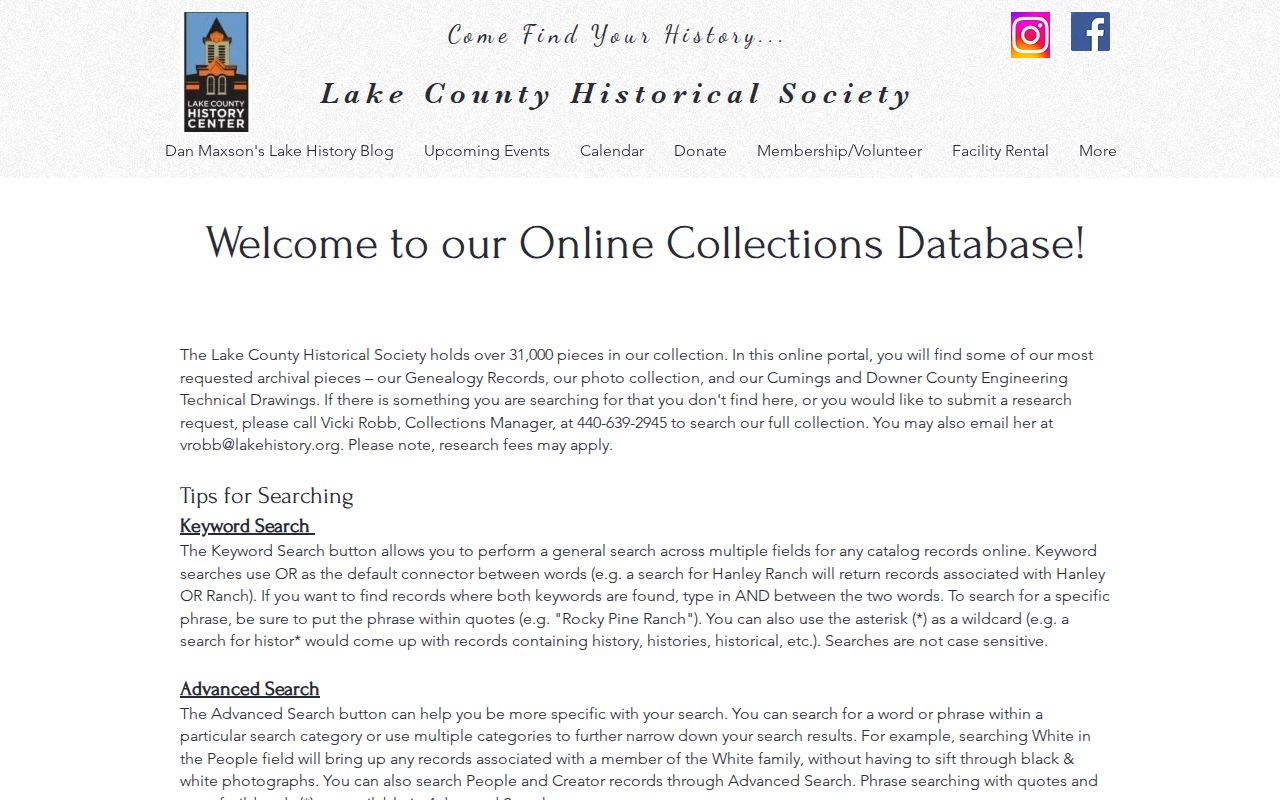
A catalog match should be cited as a collection lead until the underlying item and its metadata have been inspected.
Trace Families Through Mentor City Directories
Use a sequence of dated Mentor city directories to build a narrow household timeline. Record the title, year, page, printed locality, spelling, and address for every appearance. Moves, changed initials, or disappearance from a single edition are research leads, not conclusions. A dated directory is strongest when paired with a census, recorded instrument, map, or notice from a compatible period.
- Choose the earliest edition whose title actually includes the relevant Mentor locality.
- Copy the entry exactly and retain its page context, including any abbreviation key needed to read it.
- Check the next available edition, not an assumed annual sequence, and record whether the address or locality wording changed.
- Pair the closest directory year with the appropriate Lake County census microfilm or public federal census search.
- Use newspaper or obituary material as a dated notice source, keeping the publication, issue date, and page separate from the directory evidence.
The National Archives 1950 Census resource is the official route for the newest public federal census and supports name, location, and enumeration-district paths.
Keep the directory's source date beside the census year. Matching surnames alone do not establish that entries from different decades describe the same household.
Limits of Mentor City Directory Evidence
Morley's obituary index covers defined newspaper runs, including the Mentor Monitor from February 23, 1939 through August 1972, but the library also identifies missing microfilm portions for some newspapers around 1890-1910. Use the careful wording "not located in the indexed coverage searched," not "no obituary exists." Genealogy staff generally state a three-to-five-business-day response for an obituary request, subject to the current request limit.
Morley's telephone-directory collection is another dated lead, not a substitute for the city-directory shelf. It lists Lake County telephone directories from 1992 through 2013 and identifies 2012 as the last white-pages year. Keep the volume year and the collection source beside any research note. Do not turn a historical directory field into evidence of a present connection, and do not republish historical contact details.
Directory evidence should remain dated and source-specific. It cannot prove a continuous connection, legal title, present location, or a change from one street number to another. When the goal is the backward trail of one address, use the deed and parcel method alongside the historical editions on the Mentor past residents page.
Research tip. Preserve each original locality label, source year, and page citation. Those small details make a later correction possible when an address or spelling changes.