
Mentor Street Directory: Begin With an Address
For a current Mentor address, begin with the Lake County Auditor Real Property Search. It is the county’s parcel and assessment starting point, not a roll of people at an address. Write down the parcel identifier, situs address, legal description, and the date you checked the page. Those fields give the address research a stable basis before a map, document, or historic listing is added.
- Enter the exact address in the Auditor search and identify the matching parcel. Keep the parcel identifier and legal description with the search notes.
- Open the same address or parcel in Lake Navigator. Check the jurisdiction layer and map context before calling the location a City of Mentor address.
- Use the parcel and legal-description lead at the Lake County Recorder. Read the document type, parties, recording date, and legal description from the actual instrument or a proper copy.
- Compare the Auditor field with the recorded document. An assessment owner field, a tax mailing field, and a recorded party are separate labels with separate dates.
- For a defined City file, direct the request to Building or Planning/Code using the address, document class, and date range. A broad request about a name is less precise.
- For a past address lead, choose the right Morley Library directory title and year, then test it against maps or Recorder records rather than filling a gap by guesswork.
The chain is address to parcel, parcel to legal description, and legal description to deed or other recorded instrument. It produces a record trail, not proof of present occupancy. Note: A postal city label or tax mailing field cannot settle City jurisdiction or physical presence at an address.
Mentor Street Directory Search Fields
The Auditor’s Basic Search offers more control than a single address box. Use a narrow field when it is known, especially an address number or parcel identifier. The published instructions say a parcel identifier may be entered without dashes. They also allow wildcard use where indicated. For a street-wide query, the office’s own example uses a wildcard before the street name and leaves off the street suffix, such as *Arden.
| Auditor field | How it helps a Mentor street search |
|---|---|
| Parcel ID | Finds a known parcel identifier, including the published no-dash format. |
| Owner | Offers an assessment-name lead; use wildcards only as the Auditor permits. |
| Address Number | Narrows a search to a numbered location before a street term is applied. |
| Directional and street controls | Separate the directional part and street name where the form provides those controls. |
| Street | Supports a road-name lead, including the published wildcard method for broader street work. |
| Postal Code | Filters results by postal code but does not establish municipal jurisdiction. |
| Sort By and Results Per Page | Manage the result order and the number of records shown before opening a parcel. |
| Search | Runs the selected Basic Search terms. |
A parcel display can show the legal description, subdivision or lot details, acreage, tax district, assessed values, tax roll data, credits, and tax mailing name and address. Keep the labels intact. A tax mailing name is an assessment contact field and should not be converted into a claim about who is at the situs address.
The Lake County Auditor overview explains the office’s appraisal and public-inspection role behind the search screen.
Use the Auditor result to identify the parcel accurately, then move to the Recorder for the dated land instrument rather than treating assessment fields as the whole record.
Mentor Street Directory: Address Record Coverage
A Mentor street directory search has several custodians. The address supplies the common starting point, but the records do not duplicate one another. The Auditor has parcel and assessment fields. The Recorder has recorded instruments. Lake Navigator has spatial context. City departments hold defined City-origin files, and Morley holds dated historical collections. Use the source that created the particular record.
| Address record | Custodian | What it can show | Access route |
|---|---|---|---|
| Parcel card | Lake County Auditor | Parcel ID, situs, legal description, assessment and tax fields | Public Basic, Advanced, or Sales search |
| Parcel map | Lake County GIS | Map context, jurisdiction, layers, and nearby mapped features | Lake Navigator public viewer |
| Recorded instrument | Lake County Recorder | Document type, recorded parties, date, and legal description | Record room, AVA, Laredo account, or defined request |
| Permit or planning file | City of Mentor department | A defined City-issued permit, planning, or code record | Mentor Gateway or targeted department request |
| Historic address listing | Morley Library | A dated listing within a particular directory edition | Library collection and research route |
Coverage matters as much as a search hit. A later parcel page cannot replace a dated deed, and a directory line cannot prove title. The source date tells you whether two items could even describe the same period.
Mentor Street Records: Read the Parcel Terms
Several short terms make a large difference when Mentor address records are compared. The Auditor’s property location is useful for finding the parcel. The legal description is the more durable link into older land records. A plat can explain subdivision or lot language. A criss-cross directory is a dated address-oriented directory, not a current record of a location.
- Parcel
- A county-defined unit of real property used in assessment and mapping records, usually identified by a parcel number.
- Situs address
- The property-location address used to identify the site. It is distinct from a tax mailing address.
- Plat
- A recorded map or plan that can show lots, blocks, or a subdivision arrangement. It does not replace a survey.
- Criss-cross directory
- A directory arranged from address to a dated listing, useful only within the edition’s stated coverage.
When a result has a legal description, preserve it word for word in the research notes. That is the field most likely to connect a modern street number to a Recorder instrument, an older plat, or a historic map.
Mentor Street Deeds Across Time
The Recorder’s time bands explain why a Mentor address search may move from an online lead to the record room. Deed and mortgage books begin in 1840. The Official Public Record system began January 3, 1983, the electronic index begins in 1986, and the County states that document images are available from 1987 through its search and email-request paths. An online miss before those access eras is a reason to ask about books or a defined request, not a conclusion that no document exists.
The Recorder provides an on-site record room with physical books, public computer stations, printing and copies on business days from 8:00 a.m. to 4:00 p.m. Remote routes include the official site, free basic AVA information, account-based Laredo Select for advanced remote image access, email, fax, and public-record requests. The research did not capture AVA’s live field list, so searches should follow the current portal rather than an assumed form layout.
The Recorder’s record research options describe those access paths and their historical coverage.
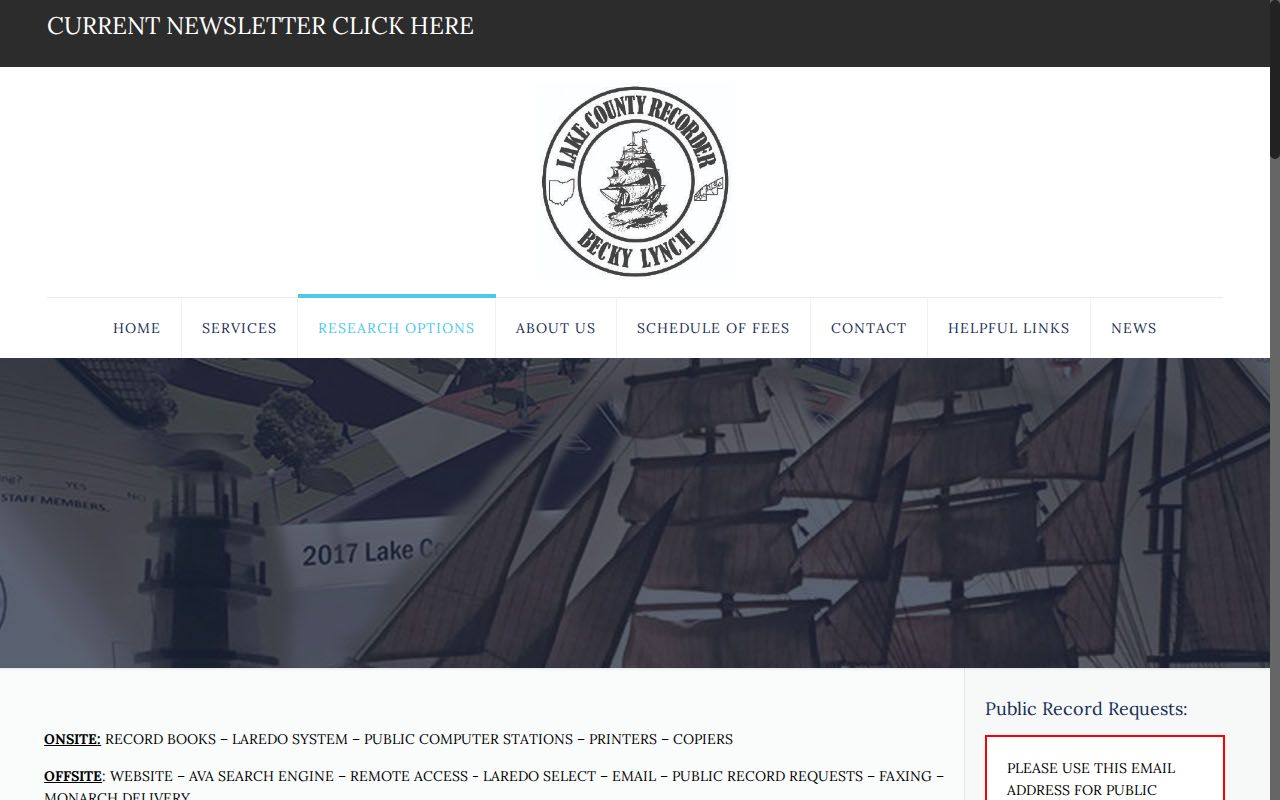
Use the image or a certified or plain copy to verify the document itself, especially when a title, party role, or legal description matters.
A useful request names the parcel identifier or legal description, the instrument type, and an inclusive date span. The Recorder says public-record requests need no special wording, though a specific request helps locate the record. Its policy states that email is free, while paper and other delivery choices can carry the published copy charges. Reconfirm the current schedule before ordering.
Mentor Address Permits and City Files
City-created property records follow a separate path from the county land chain. The City of Mentor permits page directs applications and payment through Mentor Gateway and routes questions to Building and Planning/Code. The City reports an average approval time of seven to ten business days, subject to a complete application and the review required. That timing describes the application process, not the status of any individual project.
For a known address, ask for a defined permit, planning, code, road, sidewalk, or traffic record and give a date range and document class. Mentor Gateway’s unauthenticated search fields were not available for inspection, so it is not accurate to promise an open online permit search. A permit record can establish that a City process or document exists. It does not by itself establish completion, current condition, or compliance.
Note: Route City requests to the department that created the record, because an address alone does not place every property record with the same custodian.
Mentor Street Directory: Dated Address Listings
For older Mentor streets, Morley Library is the key directory shelf. Its collection says street-address listings begin in 1923. Earlier entries may carry a locality or other description without a street number, so a later address should never be backfilled into an earlier edition. The library’s listed title runs also vary among Mentor Village, Mentor, Mentor Headlands, and Painesville-Mentor. Copy the title and year exactly before treating an entry as a lead.
Morley’s city-directory holdings also list Haines & Co. Lake-Geauga criss-cross runs beginning in the library’s listed years in 1976. Those editions can support a dated address-oriented lead. For the broader historical shelf and how a directory entry reads, see the Mentor city directories.
Historic maps give another date layer. Lake County’s atlas resources include 1840, 1857, 1874, 1898, and 1915. A historic map may show roads, plats, landholders, and place names at its own date. Compare it with the legal description and Recorder instruments before linking it to a modern parcel.
Mentor Street Directory: Postal and City Checks
Street research in Mentor needs a jurisdiction check. The Lake County postal-district map identifies 44060 as standard delivery for Mentor, but it also depicts the postal district in Mentor-on-the-Lake, part of Concord, and part of Kirtland Hills. A mailing line ending in Mentor, Ohio 44060 is useful postal information. It is not sufficient proof that the property falls inside City of Mentor limits.
Confirm the exact address with the Auditor parcel record and Lake Navigator’s jurisdiction context. This is especially important before directing a permit or City records request. The Lake County Postal Districts map supplies the local overlap warning, while the parcel and map tools supply the address-specific check.
Mentor Street Address Gaps
Older records may use a lot, tract, road, or locality term instead of a modern street number. The recorded land trail, Morley directory title, and historic map year must therefore be kept together. Census and newspaper material can provide dated context, but neither is a parcel or title record. Where a road name or number seems to change, compare the road alignment, plat and lot terms, legal description, and later Recorder instruments.
Morley’s street listings beginning in 1923 and the available atlases give useful checkpoints, but they do not create a universal crosswalk. Keep every spelling and number in a dated chronology. An unresolved mismatch is a valid result when the record evidence does not join the two addresses.
Mentor Street Records: Lawful Limits
A street search can document a parcel, recorded instrument, map layer, City file, or dated directory listing. It cannot establish present physical presence from an Auditor tax-mailing field, a recorded party, a map feature, or a name match. Ohio protections and lawful redactions also limit what a custodian may release. Do not attempt to combine fragments from public records to expose an address that a protection program or redaction keeps confidential.
The Lake County Board of Elections public lookup is a first-and-last-name form that says it is updated daily. It does not show an observed ZIP or address field on its starting page. For an official list or label request, use the Board’s current route and confirm scope, fees, and statutory exclusions with the office. A name hit, or no hit, does not establish current physical presence.